Working with an arch motif

In 2015, the idea of using a simple archway made of branches seemed a novel motif for a painting series so I made a number of variations to work from.
Although quickly finding I could capture different lighting effects of the sun and weather or time of day/night using a DSLR, working from photographs of the arches alone was not going to be direct enough. So I made drawings and a number of watercolour images in front of the arches, digitised them and then processed them in Photoshop to see where it could take me using layers, colour grading and filters as well as cutting out areas and pasting or collaging areas together to create variations and new forms. DSLR photographs of the arches and previously processed images from past projects were added into the processing stages – re-combinations, symmetry, tiling and multiplying the forms were explored.
The results were then painted, usually as interpretations in paint rather than direct copies. Although these could be seen as two series – the digital files and then the paintings – the painting series only was exhibited as Torii series I.
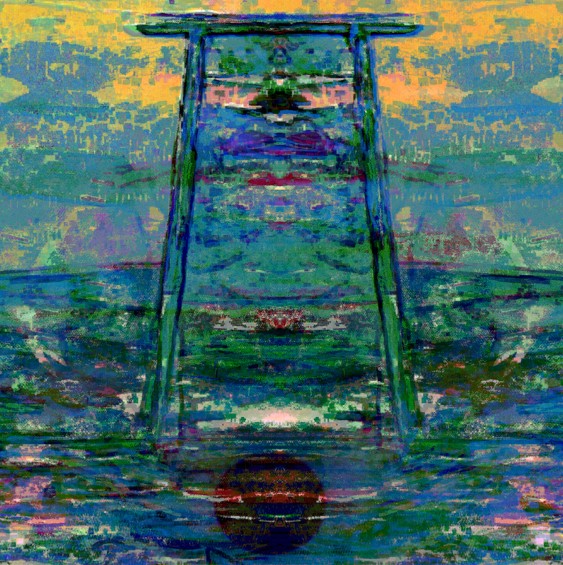
So what was the intention? To make visible an arch and landscape that did not yet exist? An arch separate from the physical variations built, and to include a subjective response from observational drawing, but not be limited solely by observational drawing techniques or media.
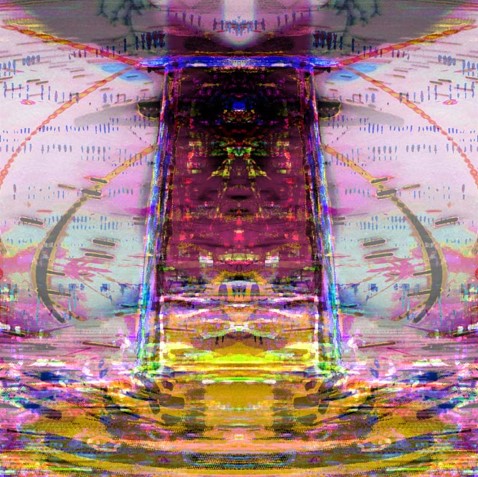
This alternate or third arch could be visualised from an environmental setting with an object built within it from parts derived from that environment. An excessive number of variations were then evolved through multiple processing of the manmade images digitally to generate new previously unseen images with differing qualities; images which also contained memories and artefacts of previous images integrated within them. Moving well beyond the starting point this would create new psychological and emotional responses to the arch motif and possibly a surprise sense of alternate experience.
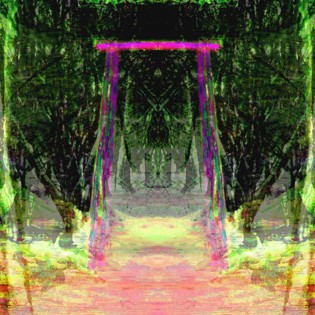
By making a painting of the digital file rather than simply printing it out, the arch motif could be re-subjectified beyond the digital stage. The idea was to get to a position of post-digital artwork where the digital is an integral part of the final image but not the end result. So speculatively the production method could be described as ‘synthetic hyper-processual post digital eco constructivism’. With the language of paint would also come the weight of art history and ‘style’ connotations. But this doesn’t really describe the intention or the use of the motif, the use of the digital processing or the decorative product – which was the purpose of all this work, imaging digital manipulations and studies from the beginning.
Arches as alchemical catalysts to a magical postdigitalism
An arch is an archaic symbol or marker, a boundary gateway, a place to pass through. In Japanese culture it represents the entrance to or within a Shinto shrine and symbolizes purification or the warding off of evil spirits. Torii perhaps originated in central India as a gateway to a monastery, though this is disputed; varieties are found throughout the wider region including in China, Korea and Mongolia. In Western civilisation, arches have been built to celebrate or to memorialise. An arch has the romance of an entrance to a ranch in Hollywood Western movies. There is also a practical use in a garden as a bird perch, or a framework for plants to grow over, a decorative feature, often leading to a different part of the garden layout.
For my own purpose I wanted a motif for an explorative series of artworks, an object that could exist physically but could also be abstracted or codified or simplified or modelled digitally, as I wished, for use as a learning tool. The use of the cultural name Torii, then seemed appropriate for series I, as it became a gateway for experimental discovery. All this effort eventually led to the realisation that I was looking not so much for a post-digital end result but more a magical alternative effect that digital processing was only one way of helping achieve. The spiritual and cultural role of the Torii nomenclature could subside in the Aquarelles series with more a general magical awareness sought in the final image – meaning the cultural symbolism seemed unnecessary additional weight. However, by then the marketing of series I meant the following Aquarelle series would lose context if I changed the name, but the passage of time and removal from the internet – as websites change and new work is made and published – has provided opportunity for renaming.
What happened next?
The ‘Torii series I’ paintings were exhibited at a number of venues, most notably at Peterborough Arts Festival 2015, and also during Peterborough Artists Open Studios of that year.
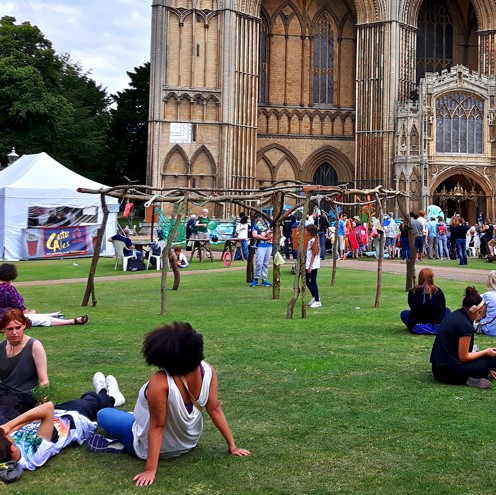
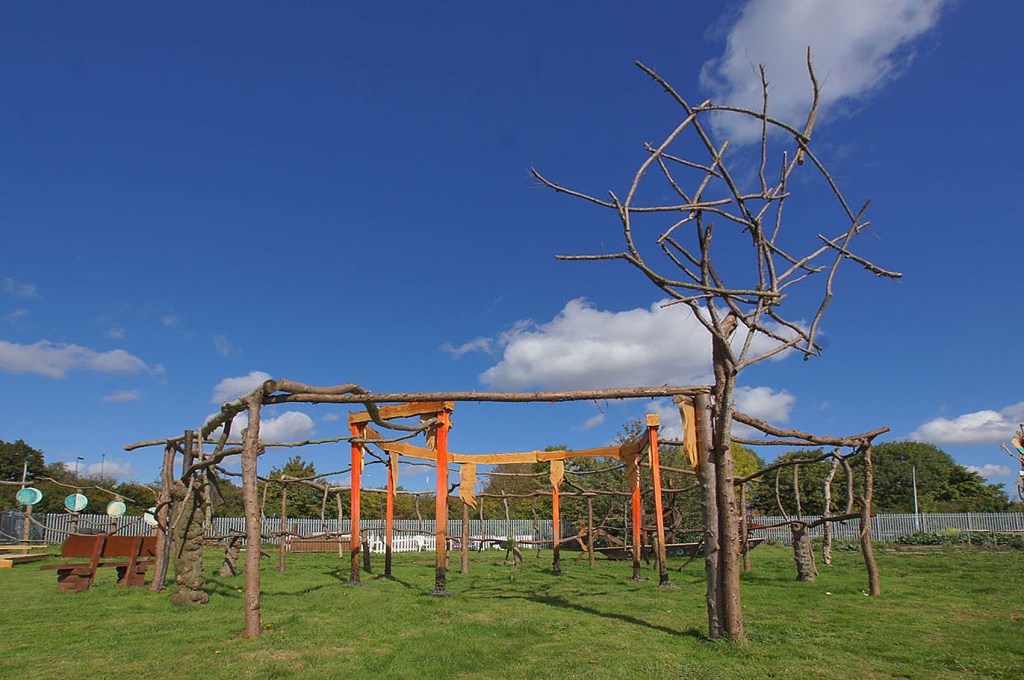
During this time and subsequently I had the opportunity to build many permutations of these bird perches/torii in mine and other people’s gardens using a variety of timber in differing sizes, the last one being constructed in 2023 – a feature to stand alongside an observatory project I had designed.

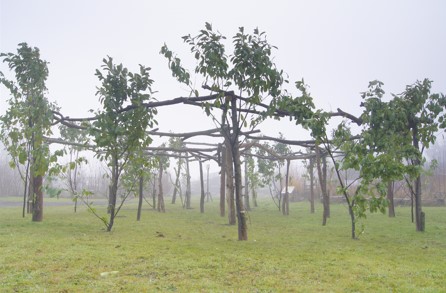
The form was also multiplied into cosmically aligned hengiform shapes that we (I with much help from friends and funding bodies) built in a few locations around Peterborough in festivals and community gardens and for specific events, such as the PECT Green Festival August 2016. The ‘Sun Henge’ construction at the Green Backyard was described amusingly grandly as “Astronomical Art connects the Green Backyard to the Cosmos”. http://www.pect.org.uk. December 20, 2016). The culminating project of the branchwood hengiforms was the Westraven Community Garden Solar Sanctuary 2017, which stood amongst space-inspired artwork and structures intended to connect visitors to the garden into an active relationship of learning and relating themselves and their community garden in relation to the sun, the moon and the stars.
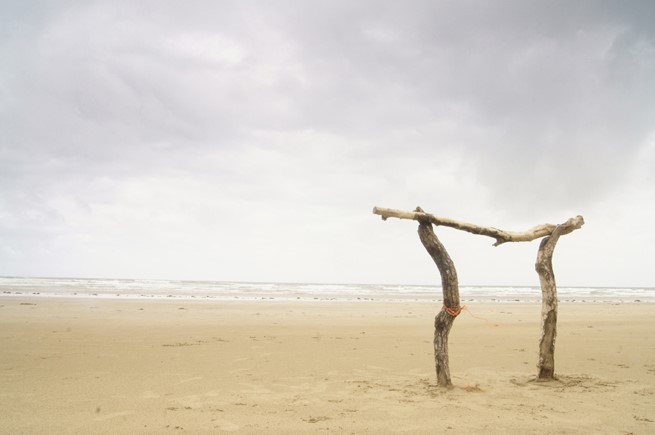
Following Torii series I, in 2015 I had wanted to explore beyond the 2D square format, so while on our annual surfing holiday I put together variations of arches made out of washed up driftwood found on Woolacombe beach and Saunton Sands. Some of the arches were over 7ft tall and required a number of us to put together. I had brought drills and fixings for this purpose, perhaps not the usual beach holiday equipment. This time using Aquarelle crayon/pastels, it allowed me drawing and watercolour effects together. More pencil studies were then made in front of the branch arches in my garden.
Again digitised, these also became composite and digitally altered images but without the addition of other previously made images external to the Aquarelle studies; making multiple versions on screen to fully explore the colours and psychological effects with less external distractions and without remnants and digital noise artefacts of a previous history introduced uncontextualised. There would be the influence from my memory but not the pixel contamination. I also wanted to explore an aesthetic not present in the first digital files of Torii I paintings where the noisy graphics of the pixels and processing were obvious in the files. Instead the processing should be concealed, hidden away; it would of course be obvious when variations were seen next to each other. For me the results perhaps make a sort of digital batik, magic post-digital abstract compositions, to rest the eyes on, with nuanced colour variations and a landscape to view, not of a specifically geolocated place.
This alternate 2D representation still carried the connection to the environment that I had felt making the Aquarelles in front of the arches, but could stimulate feelings of concern, inspiration or wonder alike. The resultant images were not taken into paintings beyond the digital stage and I felt the aesthetic was satisfied by making prints direct from the files.
The digitally processed Aquarelles took both portrait and landscape versions and were published online, as follow up to Torii series I, and they were marketed through a number of different web galleries for print sales. All digital files and paintings from both series were subsequently published online and were available to view together until 2017 labelled as Torii series I digital files, Torii I paintings and Torii series II (the digital Aquarelles). A number of the Torii series I paintings were sold to collectors and others given away to friends.
The booklet, Digital Aquarelle Arches, celebrates the digitised Aquarelles. I’ve made a selection of 20 from the 51 working files originally published in 2015. All 20 are also available as fine art prints and posters through Yelling Tree Press at time of printing this catalogue.
A big thank you to everyone who helped make the henges; they couldn’t have been made without the energy and interest of everyone involved.
James Tovey, 2025
New book announcement
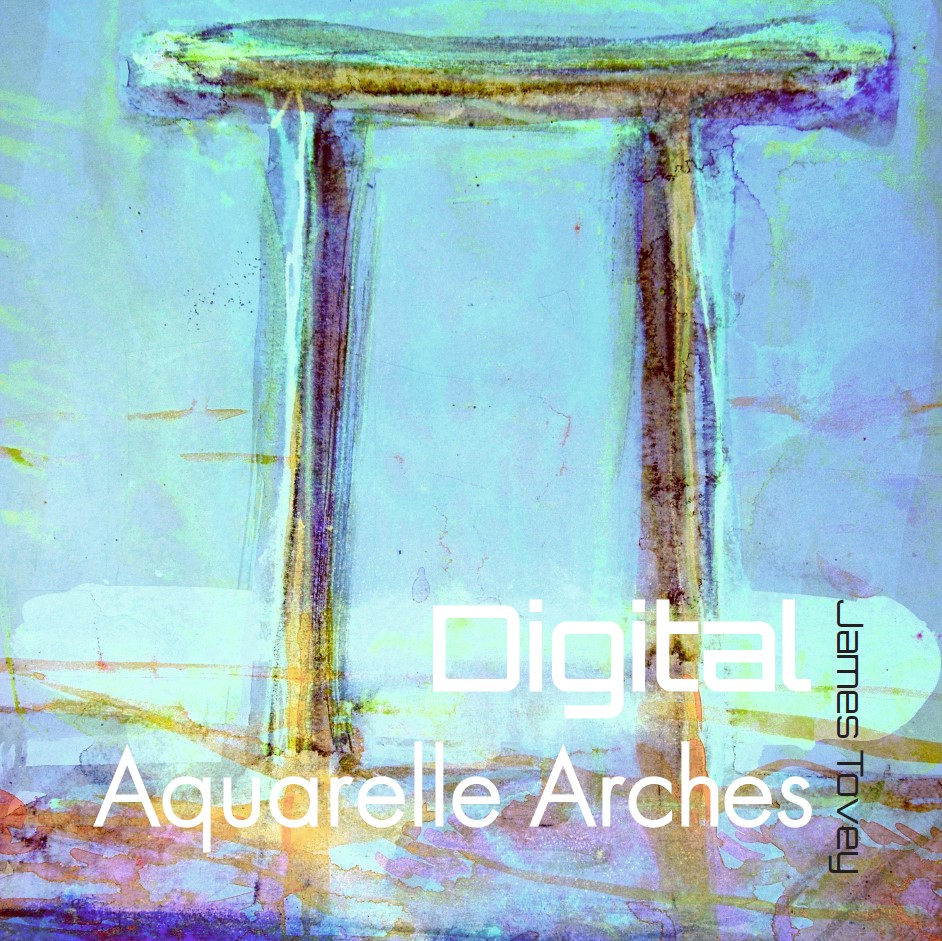
Digital Aquarelle Arches is available now from Yelling Tree Press, priced £23.50, including UK p&p. Publication date 26 October 2025. To buy, click here.
 Toveyarts.co.uk